HIV drug resistance occurs when the HIV virus mutates in a way that reduces or eliminates the effectiveness of one or more antiretroviral medications.
When resistance develops, a medication that once suppressed HIV may no longer work as well — or at all. This can allow the virus to replicate and cause the viral load to rise.
Understanding HIV drug resistance is important for anyone living with HIV, because resistance is one of the key reasons why adherence to antiretroviral therapy (ART) matters so much — and why resistance testing is a standard part of HIV care.
How Does HIV Drug Resistance Develop?
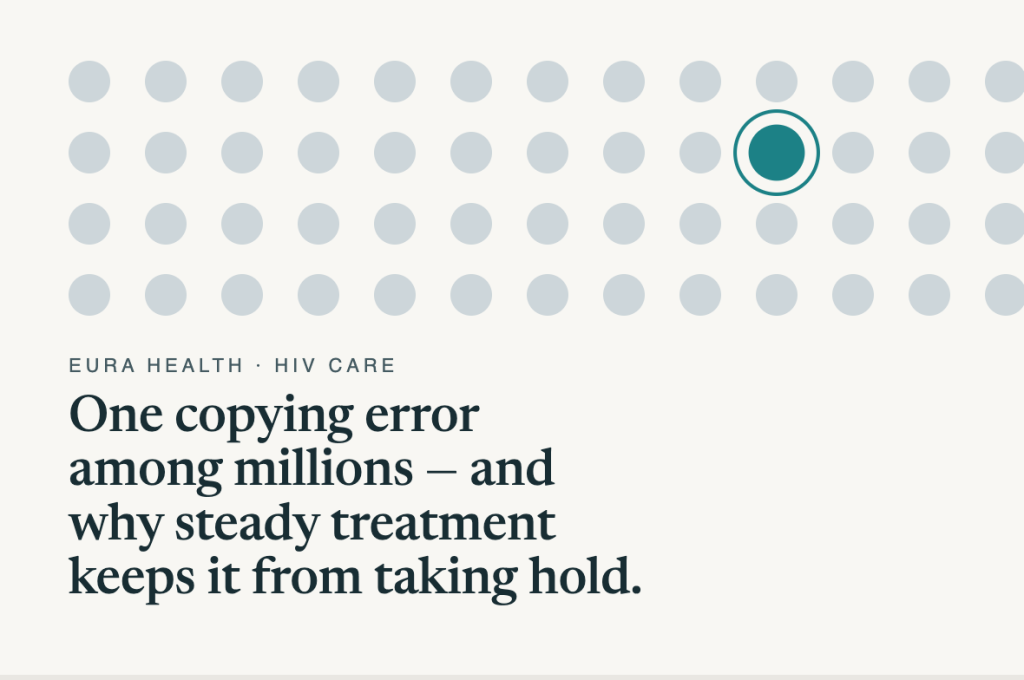
HIV is a rapidly mutating virus. Every time it replicates, small copying errors — mutations — occur naturally. Most mutations are harmless. But some mutations happen to reduce how well a specific medication binds to or blocks the virus.
Resistance typically develops in one of two ways:
Acquired resistance: Develops during treatment, usually as a result of inconsistent medication adherence. When ART is taken inconsistently, drug levels in the body may fall low enough to allow viral replication. During that replication, resistant mutations can emerge and become dominant — leaving medications less effective.
Transmitted resistance: A person can be infected with a strain of HIV that already carries resistance mutations, transmitted from someone else whose virus had those mutations. This is why resistance testing is recommended at the time of diagnosis, before starting treatment.
Why Does Adherence Matter So Much?
Consistent daily adherence to ART keeps viral replication suppressed. When the virus cannot replicate, it cannot mutate and develop resistance.
Skipping doses — even occasionally — creates windows where the virus can replicate under partial drug pressure. This is precisely the environment where resistant mutations gain a survival advantage and become the dominant strain.
This does not mean that missing a single dose will immediately cause resistance. But chronic poor adherence significantly increases risk over time.
If adherence is a challenge — due to side effects, schedule, mental health, access, or other reasons — talk with your provider. There are often practical solutions, including medication changes, reminder systems, or support services.
What Is HIV Resistance Testing?
Resistance testing is a blood test that analyzes the genetic sequence of HIV to identify which mutations are present and predict which medications the virus is likely to respond to — or resist.
There are two main types:
Genotypic resistance testing: Sequences the HIV genetic code and identifies specific mutations associated with drug resistance. This is the most commonly used type. Results list specific mutations and their implications for each antiretroviral drug class.
Phenotypic resistance testing: Directly measures how well each medication inhibits the specific virus strain. More complex and less commonly used than genotypic testing in routine clinical practice.
When is resistance testing done?
- At diagnosis — before starting ART, to detect any transmitted resistance mutations
- When viral load is rising or failing to suppress — to identify which medications may have lost effectiveness
- When switching regimens — to inform the choice of new medications
What Are the Main HIV Drug Classes and Resistance Patterns?
Modern ART regimens typically combine medications from different drug classes to suppress HIV through multiple mechanisms simultaneously. This multi-class approach is one reason why resistance is much less common today than in the early years of HIV treatment.
Common drug classes include:
NRTIs (Nucleoside/Nucleotide Reverse Transcriptase Inhibitors): Block an enzyme HIV needs to copy itself. Resistance mutations include M184V (associated with lamivudine/emtricitabine resistance) and the thymine analogue mutations (rams) associated with older NRTIs.
NNRTIs (Non-Nucleoside Reverse Transcriptase Inhibitors): Also target reverse transcription but at a different binding site. Often a single mutation can cause high-level resistance to an entire NNRTI, which is why NNRTIs require strong adherence.
Integrase Inhibitors (inst is): Block the enzyme that integrates HIV DNA into the host cell’s DNA. Major resistance mutations (Q148, N155, Y143) are associated with reduced effectiveness of some integrate inhibitors, though newer agents in this class have higher barriers to resistance.
Protease Inhibitors (PIs): Block the enzyme that processes new HIV proteins. Resistance to boosted protease inhibitors generally requires accumulation of multiple mutations, giving this class a relatively high barrier to resistance.
Your resistance test report will list which mutations your virus carries and what they mean for specific medications. Your provider will interpret results and use them to guide treatment decisions.
What Happens If HIV Becomes Resistant to Medication?
If resistance testing reveals that your current regimen is no longer fully effective, your provider will review results and design a new regimen based on which drug classes and medications your virus remains sensitive to.
Most people — even those with resistance to some drug classes — have effective treatment options available. The HIV treatment landscape has expanded substantially, and newer medications with high barriers to resistance, as well as long-acting injectable options, have given providers more tools to work with.
It is important not to stop taking medications without guidance, even if you suspect they may not be working. Stopping ART can allow the virus to replicate rapidly and worsen resistance.
Can Drug Resistance Be Prevented?
In most cases, yes.
The most effective way to prevent acquired resistance is consistent adherence to ART. Taking medication every day as prescribed keeps viral replication suppressed and eliminates the conditions under which resistance develops.
Additional strategies include:
- Using regimens with a high barrier to resistance (particularly integrase inhibitor-based regimens)
- Regular viral load monitoring to detect any rise in viral replication early
- Open communication with your provider about side effects, adherence challenges, or medication concerns — so regimens can be adjusted before problems develop
Frequently Asked Questions About HIV Drug Resistance
Can I develop resistance if I take my medication perfectly?
Resistance from perfect adherence is extremely rare with modern ART regimens. The greatest risk of resistance comes from inconsistent adherence or drug levels that are too low to fully suppress the virus.
What if I was infected with a resistant strain?
Transmitted resistance is identified through baseline resistance testing at the time of diagnosis. If resistance mutations are present, your provider will choose a regimen that accounts for them. Most people with transmitted resistance have effective treatment options.
Does resistance to one drug mean all drugs in that class stop working?
Not necessarily. Some resistance mutations affect only specific medications within a class, while others cause broader cross-resistance. Resistance testing results specify which drugs are affected. Many people retain options within affected drug classes or can switch to a different class.
What is a high barrier to resistance?
A high barrier to resistance means the virus needs to acquire multiple mutations — rather than just one — before a medication loses effectiveness. Newer integrase inhibitors (bictegravir, dolutegravir) and boosted protease inhibitors have high barriers to resistance. This makes them more forgiving of occasional adherence lapses.
Can resistance mutations disappear?
Resistant mutations do not disappear — they remain archived in the viral reservoir. If a medication that was resistant to is reintroduced, those mutations can re-emerge. Resistance history should always be considered when designing or changing ART regimens.
How do I know if my treatment is working?
Regular viral load testing confirms whether ART is suppressing the virus. An undetectable or stable viral load indicates treatment is working. A rising viral load is a signal to evaluate adherence and consider resistance testing.
Staying on Top of Your HIV Care
HIV drug resistance is largely preventable with the right medication, consistent adherence, and regular monitoring.
At Eura Health, HIV care includes individualized antiretroviral therapy, viral load and CD4 monitoring, adherence support, and access to resistance testing when needed. Your provider will work with you — not around you — to keep your treatment effective. Request an appointment with Eura Health.
Medical Disclaimer: This article is for general educational purposes and is not a substitute for individualized medical advice, diagnosis, or treatment. HIV treatment decisions require clinical evaluation and should be made in partnership with a qualified healthcare professional.