Most people have heard of PrEP, the daily pill that prevents HIV. Far fewer have heard of its newer sibling: DoxyPEP — a single dose of an antibiotic taken after sex that dramatically lowers the risk of the three major bacterial STIs.
It’s one of the most significant advances in sexual health in years; it’s recommended by the CDC, and it’s still flying under the radar. Here’s what it is, what the evidence shows, and who should consider it.
What Is DoxyPEP?
DoxyPEP stands for doxycycline post-exposure prophylaxis. The concept is simple: take 200 mg of doxycycline — a common, inexpensive antibiotic that’s been used for decades — within 72 hours after sex, and it sharply reduces your chance of developing syphilis, chlamydia, and gonorrhea from that encounter.
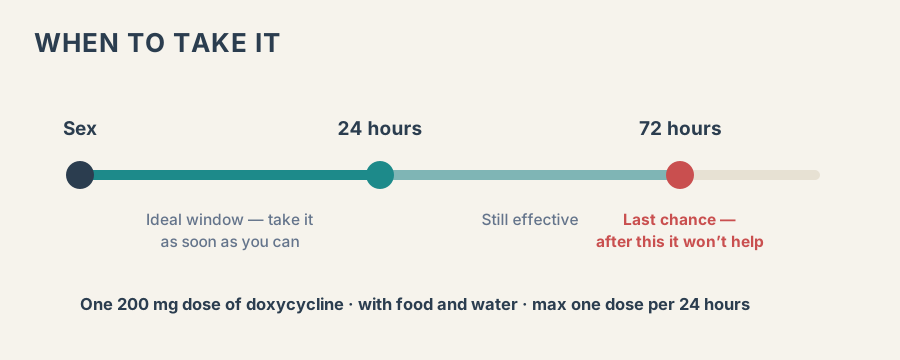
Think of it like emergency contraception, but for bacterial STIs: one dose, after the fact, that prevents infection from taking hold. The sooner after sex you take it, the better — ideally within 24 hours, and no later than 72.
It does not prevent HIV (that’s what PrEP is for), and it does not prevent viral infections like herpes or mpox. DoxyPEP and HIV PrEP work on completely different infections, and many of our patients take both.
What the Evidence Shows
The landmark DoxyPEP trial, published in the New England Journal of Medicine in 2023, followed men who have sex with men and transgender women who were either taking HIV PrEP or living with HIV. The results were striking enough that the trial was stopped early:
- Syphilis infections fell by roughly 80%
- Chlamydia infections fell by roughly 80–90%
- Gonorrhea infections fell by roughly 55%
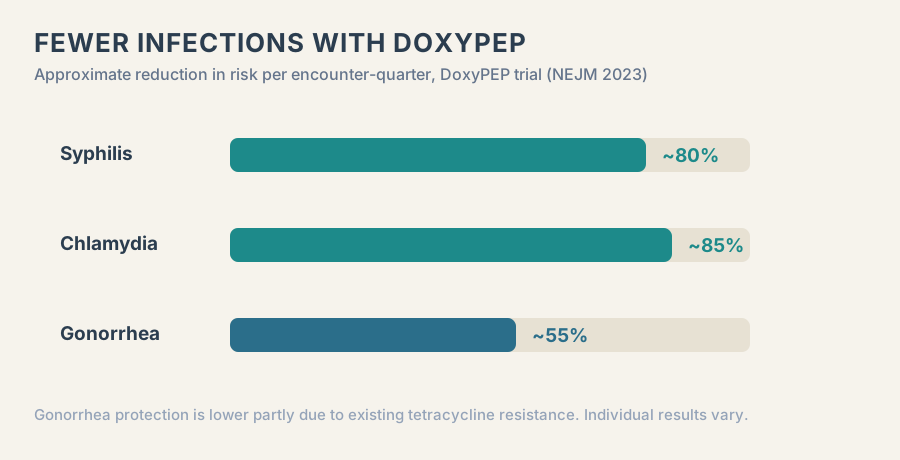
Overall, a single dose after sex cut the quarterly risk of acquiring any of the three infections by about two-thirds. A French study showed a similar pattern.
That’s a remarkable effect for one old, cheap, well-understood pill — and it’s why the CDC issued formal guidelines recommending DoxyPEP in 2024.
Who Should Consider DoxyPEP?
Current CDC guidance recommends discussing DoxyPEP with gay and bisexual men and transgender women who have had a bacterial STI (syphilis, chlamydia, or gonorrhea) in the past 12 months — the group in which the evidence is strongest.
In practice, we also discuss it with patients outside that exact definition when their situation warrants it — multiple partners, a partner recently diagnosed with an STI, or a pattern of recurrent infections. Whether it fits is an individual conversation.
What about cisgender women? The honest answer: the one trial conducted in cisgender women (in Kenya) did not show a protective effect, likely related in part to how consistently the doses were taken, and research is ongoing. Current guidelines don’t yet recommend DoxyPEP for cisgender women — but this is an active area of study, and we’re happy to talk through where the evidence stands.
How Do You Take It?
- One 200 mg dose of doxycycline after condomless sex
- Within 72 hours, and sooner is better
- No more than one dose per 24 hours, even with multiple encounters
- Take it with food and a full glass of water, and don’t lie down for 30 minutes afterward (doxycycline can irritate the esophagus)
Most people tolerate it well. The most common side effects are stomach upset and sun sensitivity — sunscreen matters more when you’re taking doxycycline, even occasionally.
What About Antibiotic Resistance?
It’s the right question to ask, and it’s the main scientific debate around DoxyPEP.
Widespread use of an antibiotic creates pressure for bacteria to develop resistance — both the STIs themselves (gonorrhea already shows substantial tetracycline resistance, which is partly why its protection number is lower) and bystander bacteria that live on and in all of us. Researchers are actively monitoring for resistance signals, which is why DoxyPEP targets the people most likely to benefit rather than recommending it for everyone.
Our approach follows the guidelines: offer it where the evidence shows real benefit, monitor appropriately, and stay current as the data evolves.
DoxyPEP Still Comes With Testing
DoxyPEP reduces risk — it doesn’t eliminate it, and it does nothing for HIV, herpes, hepatitis, or mpox. Regular STI screening remains part of the picture: CDC recommends testing every 3–6 months while using DoxyPEP, which conveniently lines up with the lab schedule most of our PrEP patients already follow.
If you’re on PrEP with us, adding DoxyPEP usually changes almost nothing about your routine — same visits, same labs, one more prescription in the cabinet for when you need it.
How to Get DoxyPEP at Eura Health
This is exactly the kind of conversation telehealth is good for:
- A visit — we review your sexual health, history, and whether DoxyPEP fits
- Baseline testing if you’re due for it
- A prescription sent to your pharmacy — doxycycline is inexpensive, often a few dollars with or without insurance
- Ongoing screening every 3–6 months, bundled with your existing PrEP labs if you’re on them
Already a patient? Message us through the portal, and we can usually handle it at your next visit — or sooner.
Frequently Asked Questions About DoxyPEP
Is DoxyPEP the same as PrEP?
No. PrEP (like Truvada, Descovy, or Apretude) prevents HIV and is taken on an ongoing basis. DoxyPEP prevents bacterial STIs and is taken as a single dose after sex. They’re complementary — many people use both.
How fast do I need to take it?
Within 72 hours of sex, and the sooner the better. After 72 hours, it’s not expected to work for that exposure.
Can I take it every day I have sex?
Yes — one dose per 24-hour period, even if you have multiple encounters in that window.
Does it work for vaginal or front-hole sex?
The strongest evidence is in gay and bisexual men and transgender women. The one trial in cisgender women didn’t show benefit, and guidelines don’t currently recommend it for them. Talk to us about your individual situation.
Do I still need condoms?
DoxyPEP reduces bacterial STI risk substantially but not completely, and it does nothing for HIV or viral STIs. Condoms remain an effective tool; how you combine strategies is a personal decision worth discussing.
Will my insurance cover it?
Doxycycline is a cheap generic — typically a few dollars per fill, often less than a copay. Cost is rarely a barrier.
This article is general health information, not medical advice, and it doesn’t create a patient relationship. Whether DoxyPEP is right for you depends on your individual situation — talk to a licensed clinician.